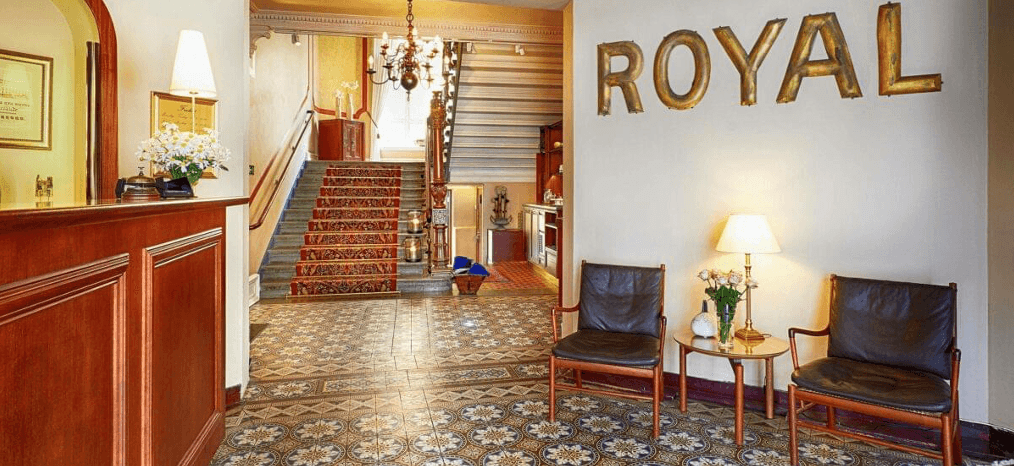
It doesn’t get any simpler - or more complicated - than this when it comes to understanding why organizations thrive or struggle
Family-owned Hotel Royal is Gothenburg’s oldest hotel, with a 🌟 9.1 (“Fantastic”) rating on Booking. When you arrive, you can immediately tell that something is different. You feel genuinely welcome (for real), and every detail reflects a culture of caring about and wanting the best for the guests. Beyond the hotel being charming and fresh in itself, you sense the care through the personal treatment you receive, through the coffee and snacks constantly waiting just inside the entrance doors, through the specific items thoughtfully placed for you in the bathroom, the wonderful breakfast, the furniture arrangement that invites conversation, and so on.
I have stayed here several times now, as Royal financially sponsors accommodation for those of us involved in Mercy Ships. When I heard during my most recent visit last December that the hotel closes entirely over Christmas and New Year “because it’s an important time for the employees,” my curiosity was sparked. I got in touch with the hotel manager, Henrik Lind, to ask: what is the recipe for their success?
Henrik begins to explain: Everything starts with the owners - that’s where everything flows from. The current owner’s father bought the hotel in 1980, when it was in very poor condition. He then asked his sisters, who had just retired, if they wanted to run it. They gladly accepted and threw themselves into their new task. The sisters’ Christian values left a clear mark on the entire operation and early on established the culture of “we should see one another, see our guests, and see our suppliers.” This culture still permeates all of Hotel Royal today.
Our conversation touches on many interesting areas. When it comes to finances, the owner family has never demanded that the hotel generate huge profits. Of course it should do well - but over time. The goal is a safe and stable operation where employees stay and customers return. This leads us into a very interesting discussion about priorities. Henrik explains that in today’s culture, whenever cuts need to be made, it is almost always the staff who are affected first. But there is a bottom to that logic - and unfortunately, we have probably already passed it. He points out that most organizational problems are about understaffing, yet this is rarely acknowledged. The Swedish Work Environment Authority shows that roughly one in four employed people in Sweden has health problems linked to their work environment. This is actually a very simple equation. If we live by the principle that customers should pay as much as possible, at the lowest possible cost, and with the highest possible profit, people inevitably suffer. It doesn’t matter how many great HR programs or employee benefits we implement- the core equation is skewed, and the attempts we make to improve things become nothing more than band-aids on the wounds.
At Royal, the organization is very clear - quite hierarchical, actually. Expectations of employees are clearly defined, which in turn creates a sense of security, and within those boundaries there is a great deal of freedom. Henrik emphasizes that one of the most important things when it comes to staff is trusting people and giving them responsibility. He also says he is not particularly fond of the extensive consensus culture we have in Sweden. Everyone needs to be heard, but everyone cannot always agree. Henrik also highlights the importance of allowing room for the fact that not everyone can perform at their best every single day. If someone is having a bad day or is in pain, you need to carry one another. It’s also important to meet outside the hotel walls - you see different sides of each other and get to know one another in a different way. At the same time, how well colleagues choose to get to know each other is largely up to them. They don’t have to love each other, as long as they work well together.
According to Henrik, a major advantage of working in a smaller organization is the greater insight into each other’s work. As hotel manager, Henrik knows the entire operation and might one day be at the reception desk and the next in the dishwashing area. That management can - and does - perform operational work naturally builds trust among the staff. It also means that decisions are made close to the business itself, and unnecessary reorganizations can be avoided.
Later in our conversation, Henrik observes that in many ways we have lost our common sense. Because common sense can’t be quantified, it often gets sidelined. This is where I jump in and refer to an example Patrick Lencioni gives in his book The Advantage:
“A person drops their earring on the floor in a dark room. Instead of looking where the earring actually fell, the person searches under the lamp. When someone asks why - despite the earring not being dropped there—the answer is: ‘Because it’s easier to see here.’”
I think this says a lot about the culture we live in. We feel safe with strategies, structures, numbers, and KPIs because they are easier to measure, unlike culture, trust, clarity, leadership, and health, which are harder to quantify. The challenge, however, is that the problems are usually found in the latter. When we don’t dare to go where the light doesn’t shine as brightly - and don’t even dare to admit it - we simply lose our common sense.
In closing, I ask Henrik for the three most important leadership principles. He answers:
Dare to truly delegate
Take an interest in how group dynamics work
Be unpretentious - dare to listen and change your mind
As a final takeaway, he shares a YouTube link to Pike Place Fish Market in Seattle, a fish market known for its positive attitude and the tradition of throwing fish between employees. From this emerged The Fish Philosophy, which consists of four clear principles: Choose Your Attitude, Be There, Make Their Day, and Play. So simple! And yet so difficult…
Key Takeaways 🔑
Culture starts with the owners
A strong relationship between management and owners is crucial
Long-term profitability requires long-term thinking
Financial results should be seen as a means to create stability, not an end in themselves
Low staff turnover is a result of how you run the business, not a separate HR initiative
Be clear about expectations while giving employees responsibility
Decisions must be made close to the operational core
Organizations often look for answers where things are easiest to measure
Common sense is not unprofessional - it is courageous

The Economy of Trust

When the Company Is No Longer at the Center

Impact & Value Creation - When Value Actually Becomes Value

Operation & Finance - Stewardship in Practice
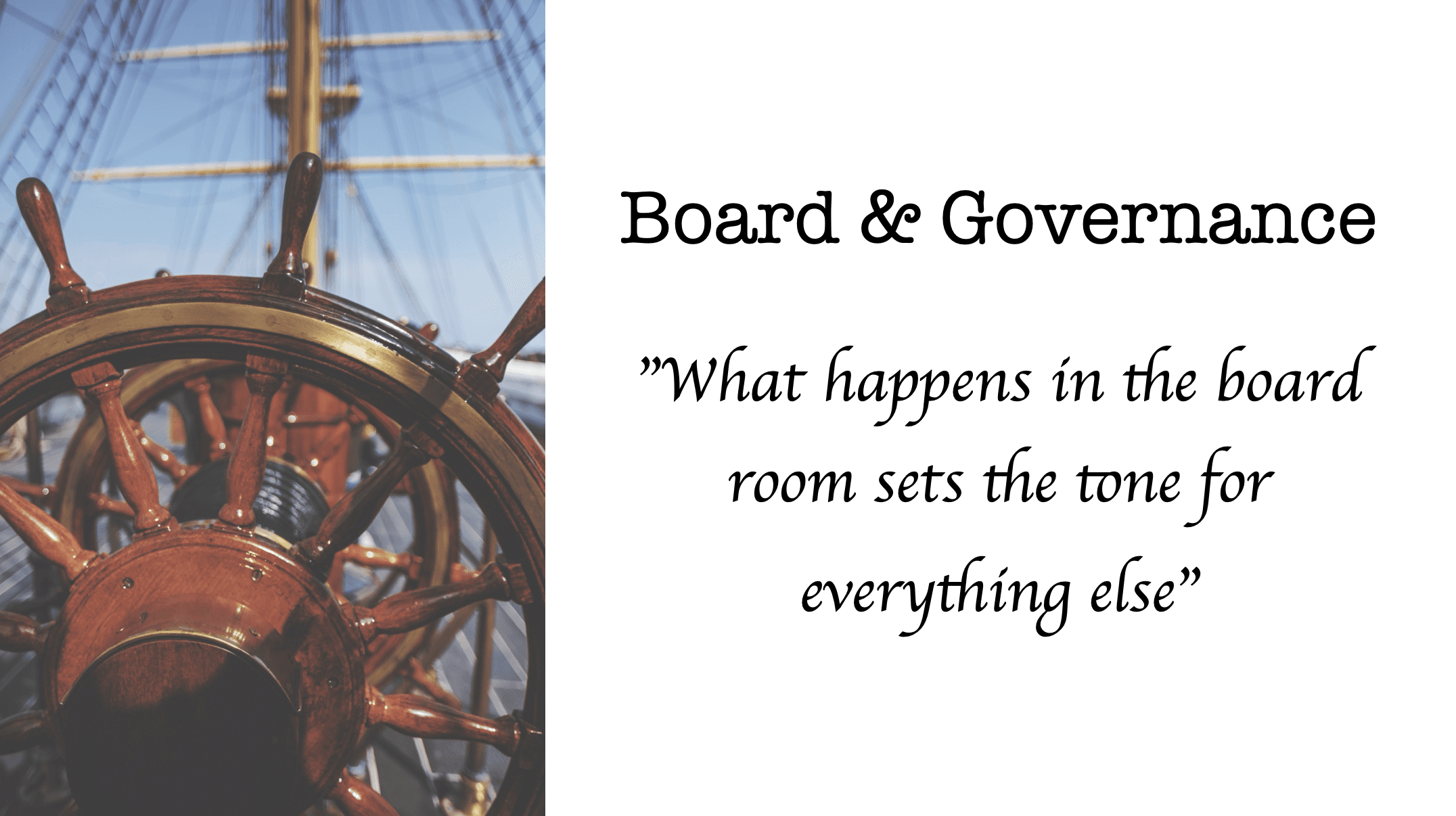
Board & Governance - Guardians of Purpose and Responsibility

People & Values - The Inner Life of an Organization
Strategy Needs More Than Smartness
The Mission & Vision Dimension of the GreenGardens® Model

Restoring Dignity to Organizational Life
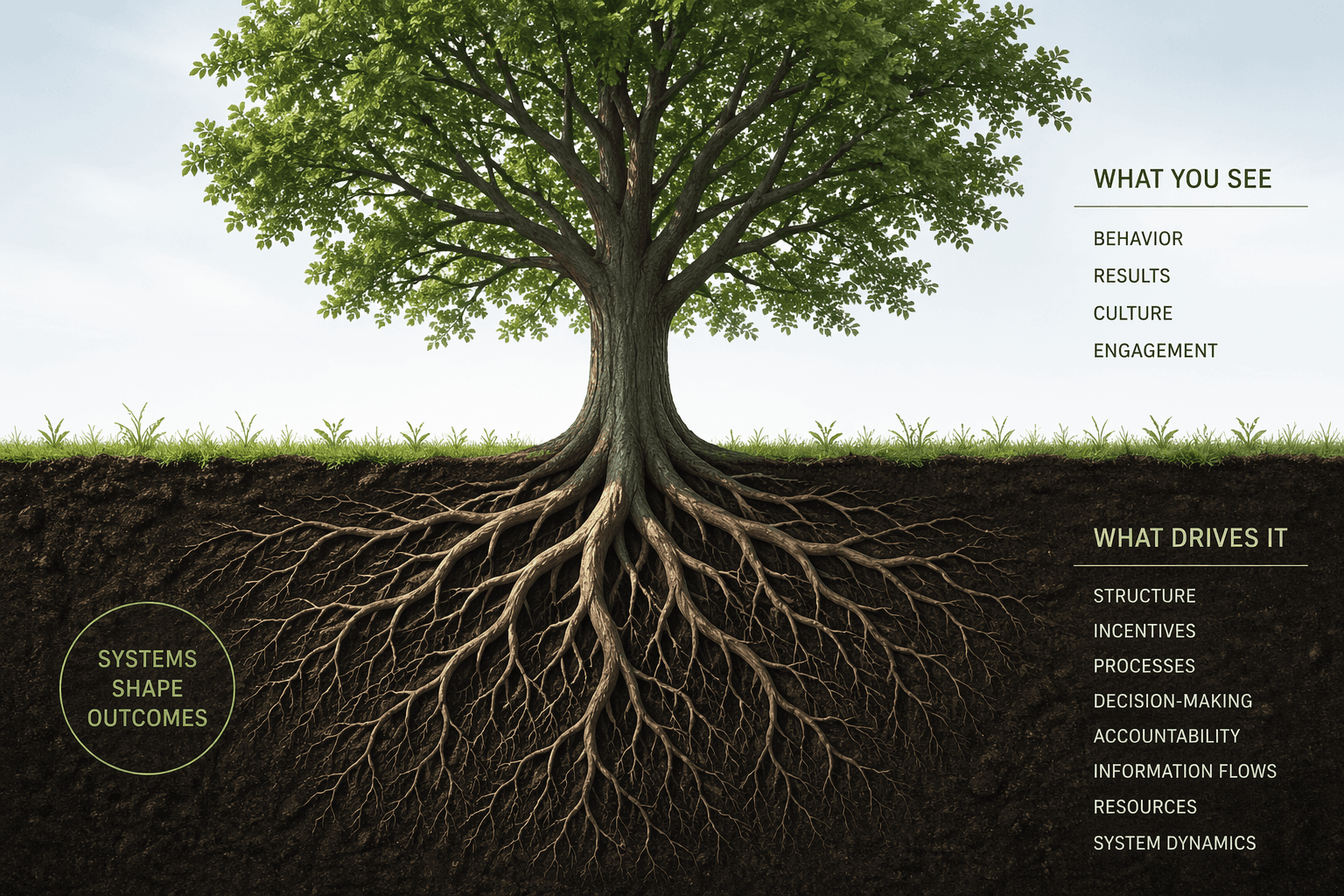
Why Organizational Problems Are Usually Systemic - And Why Most Measurement Tools Miss the Point
