Restoring Dignity to Organizational Life
This is part of a series on organizational health. In earlier articles, I explored the deeper question behind every organization and why most organizational problems are systemic rather than isolated. This third article takes the next step: what does it actually mean to restore what has been lost?
The Quest for the Healthy Organization®
In earlier reflections, I have argued that many of the challenges we see in working life today are not primarily managerial or technical problems. They are symptoms of something deeper: a loss of understanding of what a human person is, and what organizations are ultimately for. But naming the problem is not the same as addressing it. If the problem is this fundamental, what kind of response is needed? My answer is restoration.
What restoration means
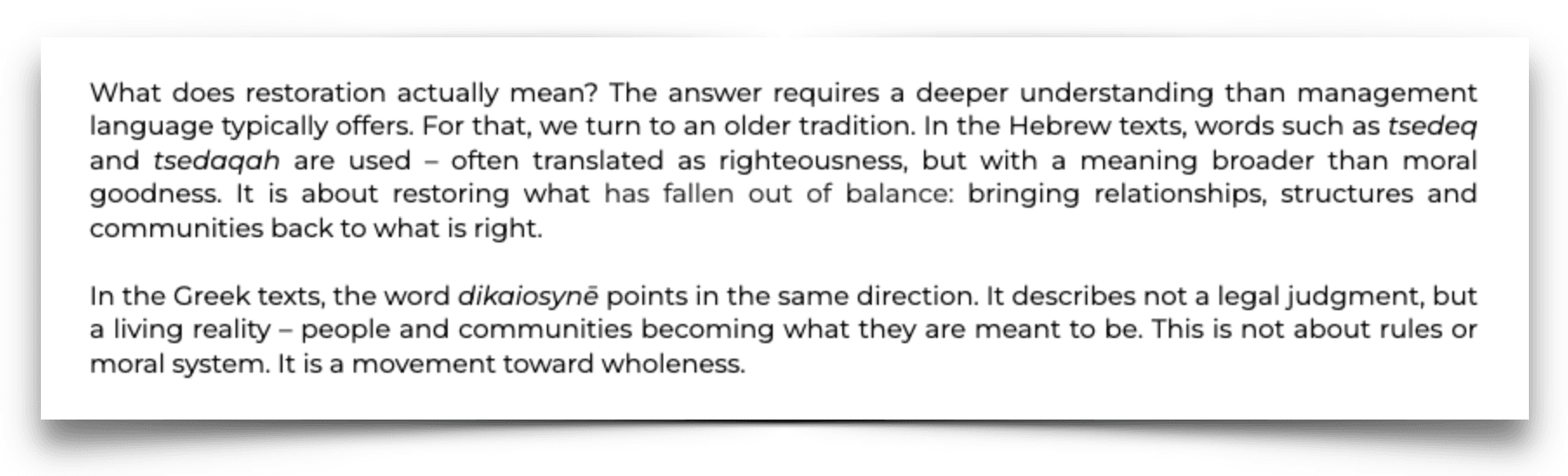
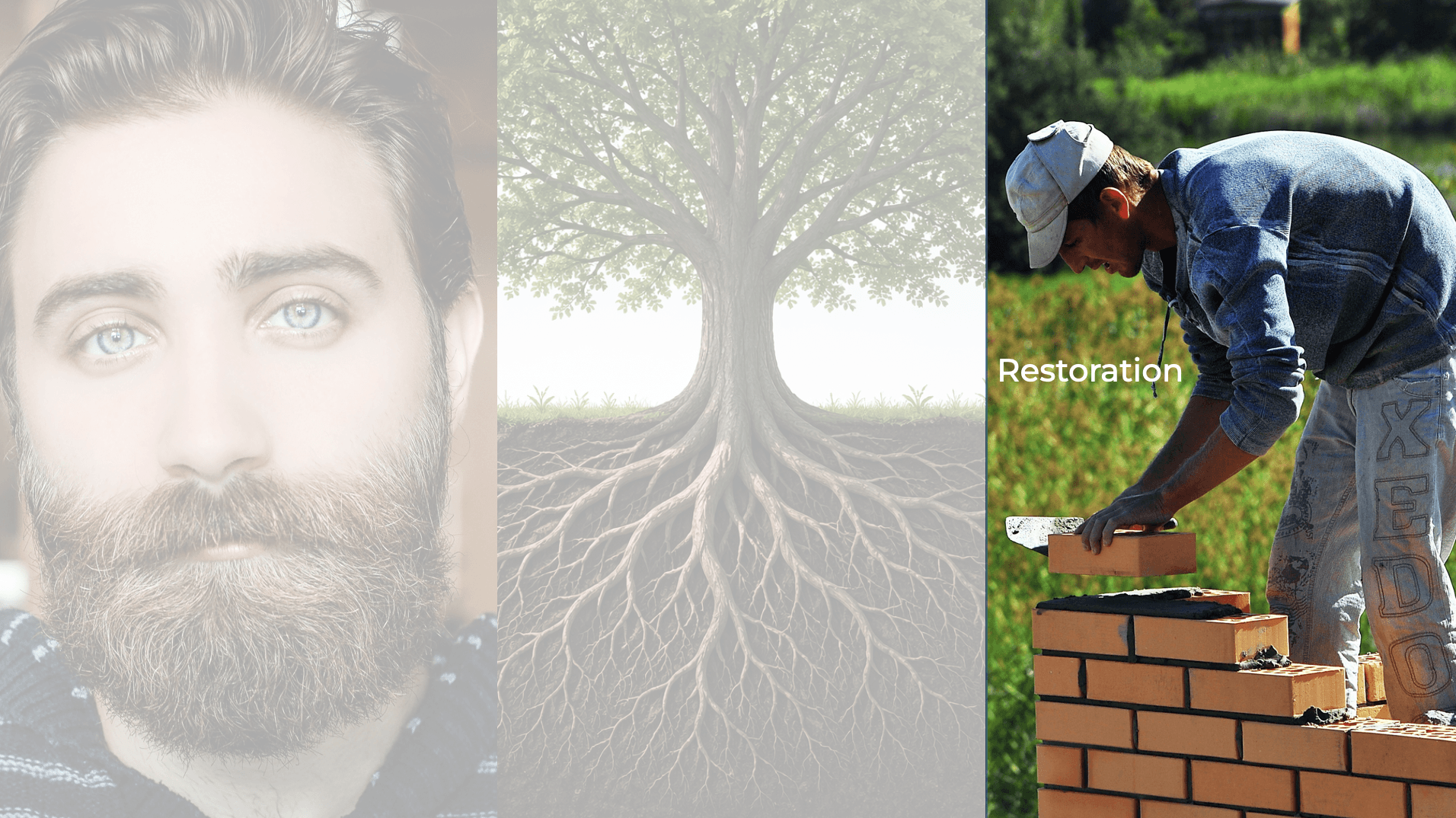
Restoration is not a return to an idealized past. It means something more precise: identifying what has fallen out of balance and working to bring it back into alignment with what is right and life-giving.
In ancient traditions, restoration referred to bringing relationships, structures, and communities back to a state of health, not by imposing something new from the outside, but by recovering what had been neglected or distorted. A restored building is not a new building. It is the same building, but with its original integrity recovered. The load-bearing walls are made visible again. The cracks are repaired, not concealed.
In organizational life, this means placing human dignity back at the center of how organizations are designed, led, and governed. Not as an add-on, but as the foundation from which everything else flows. Where most change initiatives ask how to become more efficient or competitive, restoration asks different questions: what have we stopped seeing? What has been sacrificed in the pursuit of speed and scale? And what would it take to recover it?
The slow erosion
Organizations rarely lose their way through a single dramatic event. The erosion is almost always gradual. Staffing levels are reduced. The people who remain carry more than they can sustain, but the system adapts, not because it is healthy, but because human beings are remarkably good at absorbing pressure. Informal knowledge disappears when experienced people leave. Trust is replaced by reporting. And at some point, the organization finds itself somewhere no one intended: a place where the work still gets done, but the life has gone out of it.
This pattern is familiar in healthcare, education, and social services. But it is equally present in private companies where quarterly pressure creates conditions in which long-term well-being is traded for short-term performance. The language changes, from care to throughput, from people to headcount, and with the language, the culture shifts too.
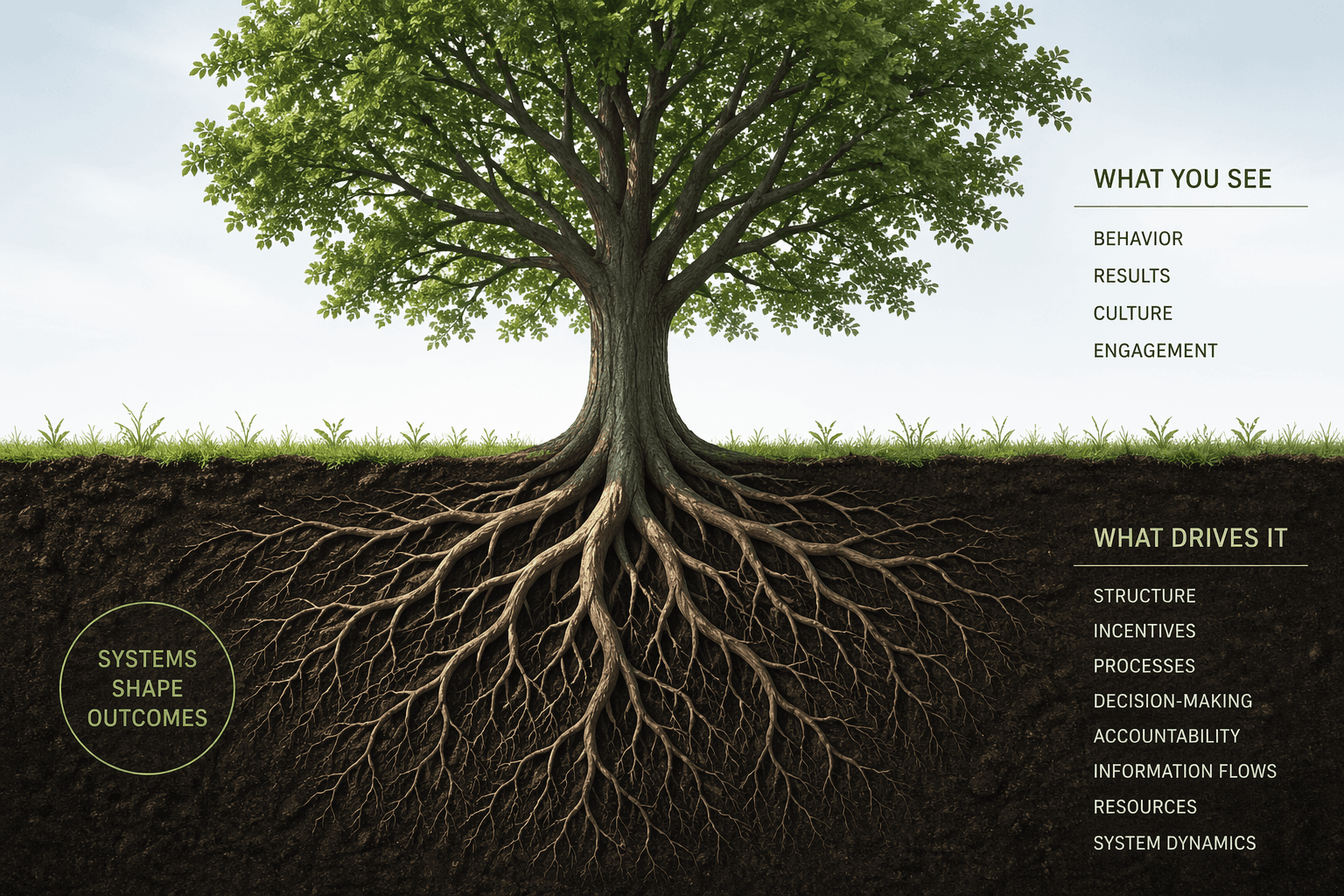
What makes this erosion so difficult to address is that it rarely shows up in the metrics organizations rely on. Financial indicators may look stable. But beneath the surface, people are disengaging, not because they lack motivation, but because the conditions for meaningful engagement have been quietly removed.
Restoration names this: what you are dealing with is not a performance problem. It is a dignity problem. And dignity problems cannot be solved with performance tools.
What restoration asks of us
Restoration begins with honesty. Not the kind that appears in anonymous surveys, but the kind that requires courage. The willingness to look at what is actually happening inside the organization. How are decisions really made? Whose voices are heard? What behaviors are rewarded in practice, regardless of what the values statement says?
In many organizations, these questions are asked ritualistically but the answers are filtered through layers of institutional self-protection. Restoration requires the courage to see the organization as it actually is, not as it presents itself.
From this honesty, the organization can begin to reconnect its everyday practices with its stated purpose. This might take some time and effort, because the distance between purpose and practice is often greater than we expect. Not because leaders are cynical, but because systemic pressures pull toward short-term optimization. Closing that distance may require difficult choices: slower growth in exchange for deeper health, fewer initiatives in exchange for greater coherence, less measurement in exchange for more trust. But organizations that make this investment consistently find that it pays off: in stronger engagement, better decisions, and a deeper capacity to adapt over time.
It also means rethinking what organizations pay attention to. Most systems capture what can be quantified: revenue, margins, compliance. But the dimensions that matter most for long-term health, such as trust, meaning, and psychological safety, resist easy quantification. A restored organization does not abandon measurement. But it learns to attend to what cannot be measured, and takes that attention seriously.
Where restoration begins
There is a moment in the biblical narrative that I find illuminating. In Genesis, before any fall or failure, the human person is given a task: to work and keep the garden. The Hebrew words abad and shamar suggest serving, guarding, caring for something entrusted to you. Work, in this original picture, is not a curse or a transaction. It is stewardship. Whether or not one shares this framework, the insight is worth holding:
work, at its best, is an expression of care that dignifies the person who does it.
Restoration begins when we remember something that should never have been forgotten: that people are not means to an end. They are not resources to be allocated or headcount to be adjusted. They are human beings, whole, dignified, and deserving of organizations that honor what they are.
This is what organizational health ultimately concerns. Not just efficiency. Not just engagement scores. But the commitment to building organizations that are worthy of the people who give their time, their energy, and their trust to them every day.
Restoration is not easy. But it is necessary. And for those willing to begin, it changes everything.


When the Company Is No Longer at the Center

Impact & Value Creation - When Value Actually Becomes Value

Operation & Finance - Stewardship in Practice
Board & Governance - Guardians of Purpose and Responsibility

People & Values - The Inner Life of an Organization
Strategy Needs More Than Smartness

The Mission & Vision Dimension of the GreenGardens® Model
Restoring Dignity to Organizational Life
Why Organizational Problems Are Usually Systemic - And Why Most Measurement Tools Miss the Point

The Question Behind Every Organization
