
What Does It Take to Turn Around an Organization That Has Lost Its Direction?
The Quest for the Healthy Organization®
In January 2025, an unusual ownership change took place in Sweden’s education sector. The vocational training company Astar was taken over by Katharina Sjögren Edström and Hannah Börefelt. Both had previously held key roles in the company, Katharina as CEO and Hannah as HR strategist, but had been away from the organization for seven years.
With around 300 employees and operations in several locations across the country, Astar is an established player in adult education. At the same time, it is also an organization with a turbulent history - from rapid growth and a strong culture to periods of weaker performance, leadership changes, and questioned quality.
When Katharina and Hannah stepped through the doors of Astar, it was not the first time they had faced the challenge of rescuing the business. Some twelve years earlier, they had helped rebuild the company from the remnants of one of Sweden’s most high-profile school bankruptcies. At that time, the task was to create something new from a damaged brand and rebuild trust among both employees and students. Now they encountered an organization that had once again lost its course - with weakening finances, criticism from authorities, and a workforce that had seen several leadership teams come and go.
The assignment was as simple as it was difficult: to once again turn around a company where quality had eroded and the culture had begun to unravel. But instead of starting with finances or structures, they began somewhere else - values. For Katharina and Hannah, an organization is never stronger than the culture that carries it.
I interviewed Hannah to understand what it really takes to turn around an organization that has lost its direction. What followed the takeover became the beginning of yet another turnaround - this time with the ambition not only to rescue the business, but to build something that lasts over time.
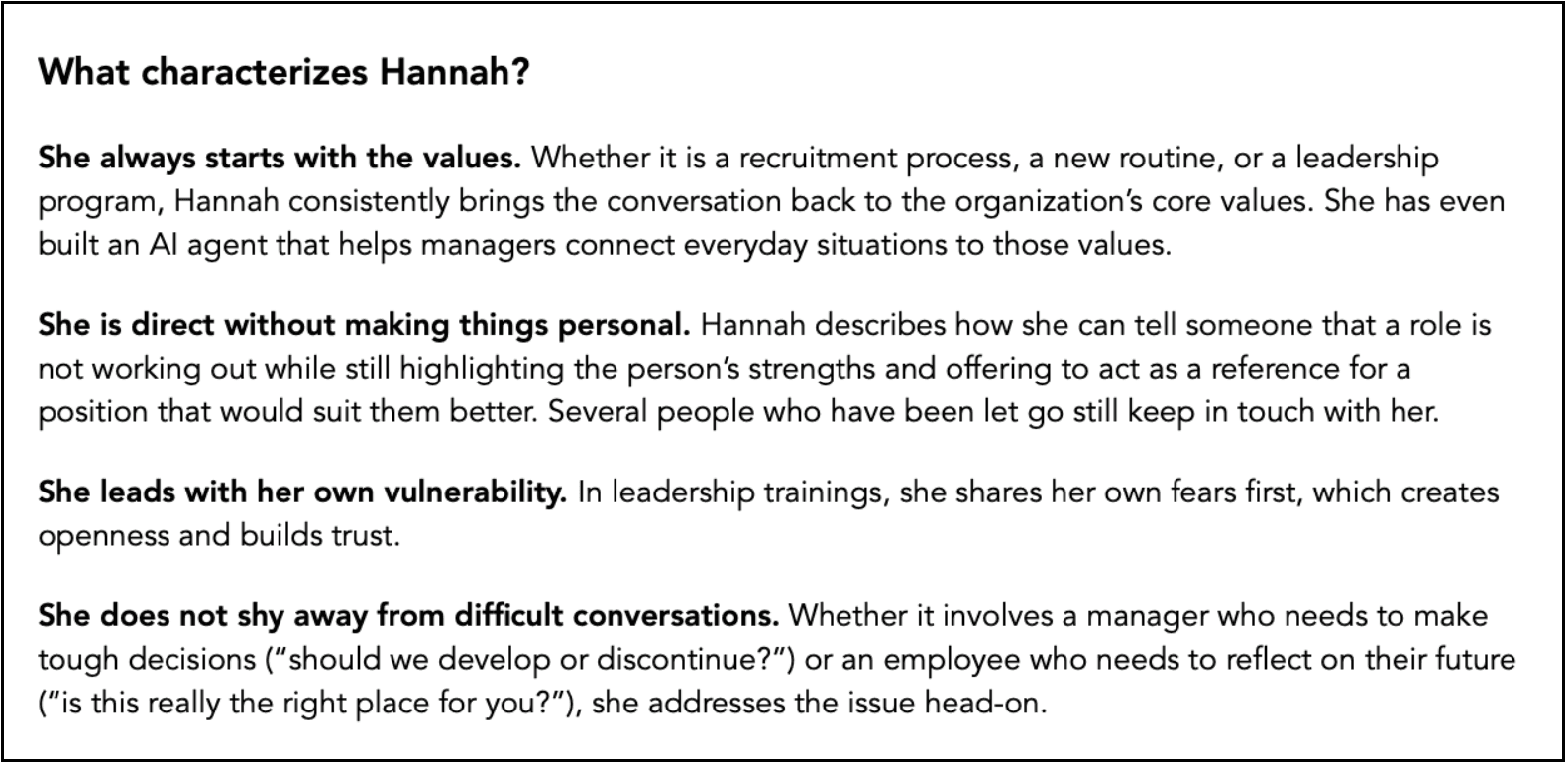
When she describes the work at Astar, Hannah returns again and again to the same theme: culture. For her, culture is not a soft side issue in an organization - it is the very foundation. On her LinkedIn profile she has the headline “People and Engagement is the key!” beneath her name. Finances, structures, and business plans can always be adjusted - but without a shared set of values guiding behavior, everything else eventually falls apart.
“You can say as much as you want about what you stand for. But in the end, people adapt to what they are actually held accountable for,” she says.
That is why she and Katharina chose a different starting point than many organizations do in times of crisis. Instead of beginning with costs, organizational charts, or strategic plans, they began with values.
Employees Shaped the Values
Rather than defining the organization’s values within the leadership team, they chose to involve the entire organization. Already in February, just one month after the takeover, the first workshops were held where employees were asked to describe the behaviors they wanted to see at Astar.
“We asked what behaviors we want to see - not just words, but how we actually want to act.”
The response was extensive. Hundreds of words and expressions were collected and sorted, and eventually the work resulted in three central concepts: professional pride, perseverance, and joy at work.
When the first draft was shared with the organization, many employees recognized their own wording in the document. The ideas that emerged from the discussions were not only collected but also translated into principles for how the work should be carried out. The values were then broken down into concrete behaviors for each role in the organization - teacher, administrator, and educational support staff - and linked directly to salary criteria and development discussions. In this way, it became clear to every employee what was expected and what they would actually be evaluated on.
Transparency as a Way of Working
Since taking over the company, the leadership team sends a weekly letter to the entire organization every Friday. In it they describe what has happened during the week, which meetings they have had, which business contacts have been established, and what issues they are currently working on.
In addition to the weekly letter, Hannah publishes an HR letter in which she highlights new routines, elements of the values work, and ongoing HR initiatives.
“We are very transparent. It’s simply about creating security through transparency.”
Hannah and Katharina have also placed great emphasis on being visible throughout the organization. From the very beginning they traveled to visit as many units as possible.
The reasoning is simple: employees need to know who leads the organization and what they stand for.
A Clear Direction – With Consequences
As the values began to take hold in the organization, they also brought consequences. When goals and development discussions were linked to the new values during the autumn, it became clear to everyone what the new Astar meant in practice. Employees who did not share the new direction chose to move on.
Staff turnover increased, but according to Hannah, that was both expected and appropriate.
“Those who suddenly felt controlled didn’t want to stay. But those who are passionate about quality in their own work see it as something positive.”
That the organization is moving in the right direction is also reflected in feedback from employees. After the weekly letters, some reach out to express appreciation for how their work is recognized and connected to a larger purpose. They describe a leadership team that openly shares its thinking while maintaining focus on financial performance, the work environment, and motivation.
A Mission Beyond the Organization
For Hannah, education is fundamentally about something bigger than organizational management or business. She describes it as a mission toward both students and society.
The organization is funded by taxpayers’ money - and that carries responsibility. Many of the people who come to Astar have been unemployed for a long time, and through education they get a new opportunity to enter the labor market.
“We have an important mission - to help people move from being benefit recipients to becoming taxpayers and to find their place in society.”
Culture Is Not a Project – It Is a Choice
In a sector where results are often measured in numbers and regulatory approvals, Hannah and Katharina show that the real turning point rarely comes from a new organizational chart or a better budget. It comes when people understand what they are part of, what is expected of them, and why it matters.
Culture is not built through occasional kick-off meetings or documents on the intranet. It is built through consistency - when every decision, every follow-up, and every conversation reflects the same set of values.
And it requires courage: the courage to be clear about what applies, even when it means that some people choose to move on.
🔑 Key Success Factors
Start with values and culture – let the transformation begin with a shared value foundation rather than structure or finances.
Involve the entire organization – allow employees to help define the behaviors and values that should shape the organization.
Make values concrete – translate values into clear behaviors and principles for each role, all the way down to salary criteria.
Integrate values into governance – connect values to goals, follow-up, and development discussions so they become what employees are actually measured on.
Create transparency in leadership – communicate regularly about decisions, priorities, and direction so employees understand what is happening and who is leading.
Be clear about the culture – when values and ways of working become clear, some employees will feel they do not fit, while others become more engaged. Both reactions are part of the change.
Stay focused on the mission – let the organization’s societal mission and responsibility for taxpayer resources guide the work.

The Economy of Trust

When the Company Is No Longer at the Center

Impact & Value Creation - When Value Actually Becomes Value

Operation & Finance - Stewardship in Practice
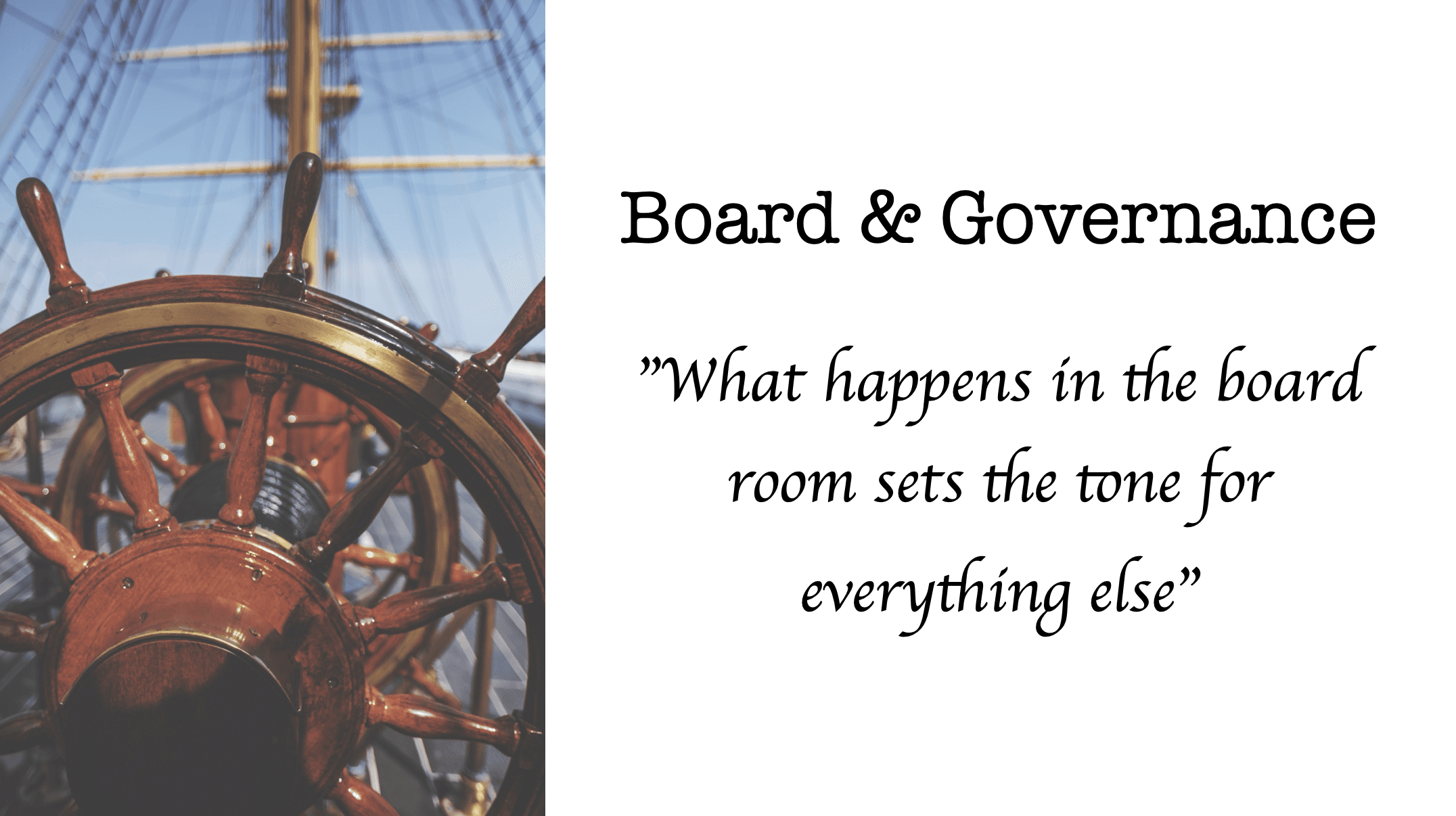
Board & Governance - Guardians of Purpose and Responsibility

People & Values - The Inner Life of an Organization
Strategy Needs More Than Smartness

The Mission & Vision Dimension of the GreenGardens® Model

Restoring Dignity to Organizational Life
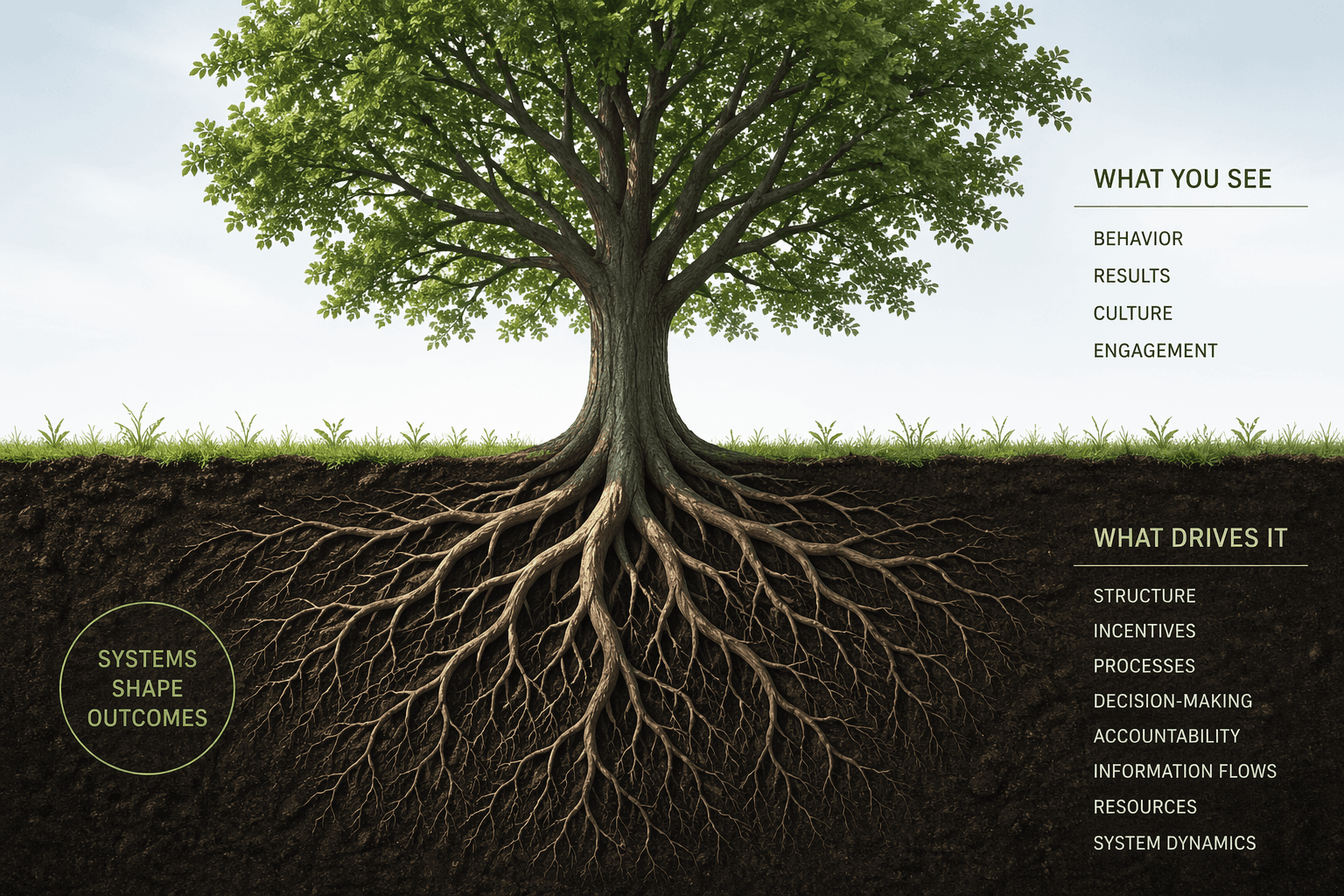
Why Organizational Problems Are Usually Systemic - And Why Most Measurement Tools Miss the Point
