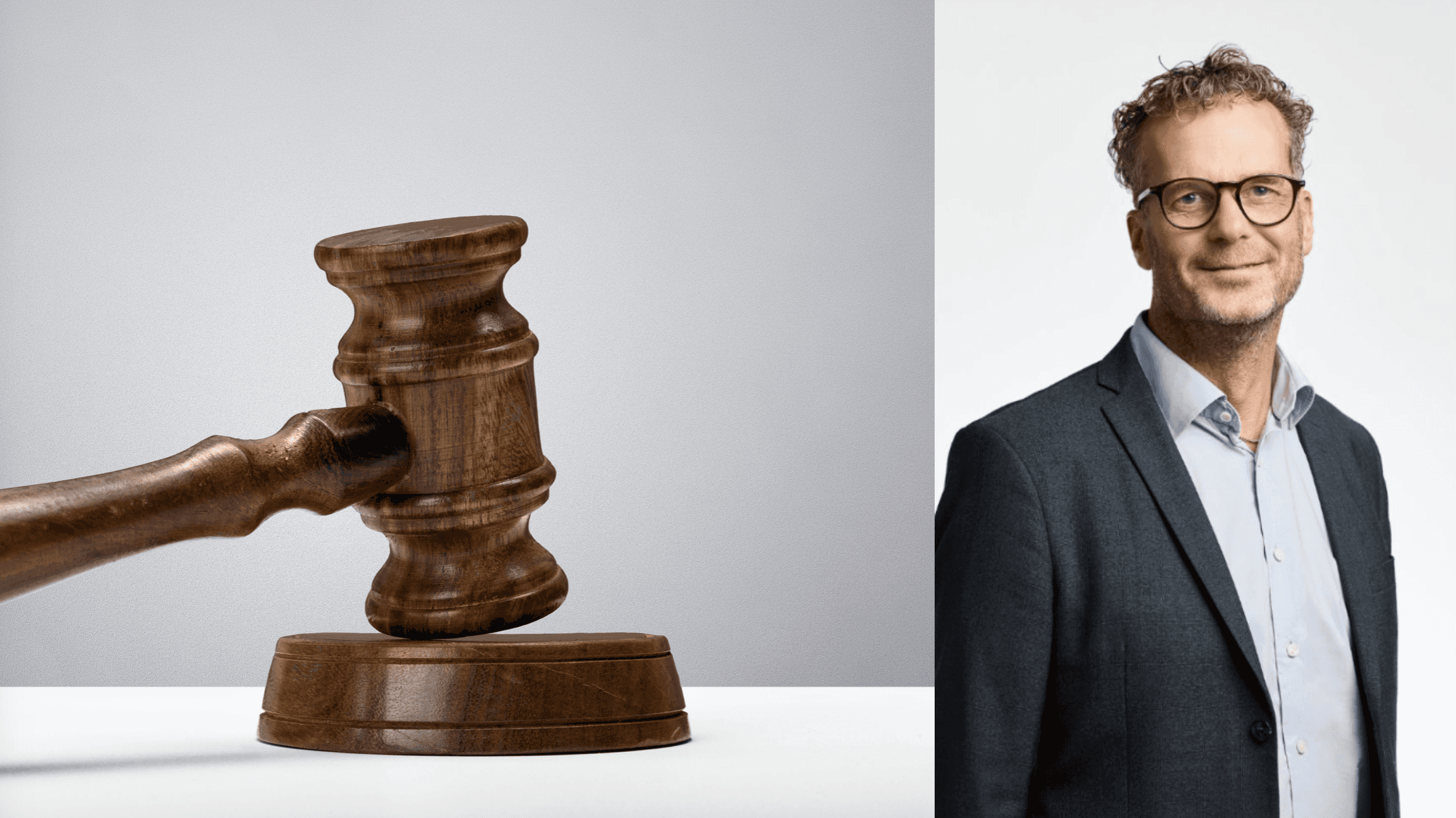
A Healthy Organization Begins in the Boardroom
The Quest for the Healthy Organization
I met Stefan Lundin at an event a number of years ago. We connected on LinkedIn, and since then I have followed him - primarily in his former role as CEO of Technogarden. When he stepped down after almost nine years in the role, I noticed just how appreciated he truly was as a leader. There was something that stood out in the comment sections when it came to relationships. Something real and genuine.
I became curious and asked if I could meet him for an interview. During our conversation, it became clear that he seems to have managed the difficult balance between leadership and strong relationships - while the pace has clearly been intense over those nine years, with revenue growing from 74 to 300 million SEK. Stefan sees it as evidence that growth did not happen at the expense of company culture. On the contrary: culture and values were what created the conditions for growth. As a leader, one plays a decisive role in setting that tone. As our conversation unfolded, a few key elements became clear: he genuinely likes people, he is honest and principled, and he does his utmost to make well-grounded decisions - something people recognize and which creates trust and respect. On LinkedIn, he describes himself in the following way:
“I am driven by a strong belief that leadership - when grounded in values and practiced with humility - can fundamentally transform both people and organizations. When we lead with heart, courage, and responsibility, we don’t just create sustainable results - we build cultures where people grow and companies flourish.”
During our conversation, it becomes clear that he practices what he preaches. Of course, there have also been situations where he acted in ways that were quite far from the values he strives to uphold. Situations Stefan later felt embarrassed about and where he had to examine his own actions. However, he has been careful not to simply sweep such things under the rug. Instead, he has genuinely reflected on his behavior, learned from it, and treated those moments as difficult but valuable lessons.
When the topic turns to board work, Stefan says that this is where a healthy organization truly begins. The board ultimately sets the tone for the company’s priorities and values. His overall experience here is mixed. He has been part of situations where values and culture were given space, but also contexts where those issues were pushed aside. Because financial metrics, risks, and statutory responsibilities carry significant weight in the boardroom, it is easy for the more difficult-to-measure “soft values” - such as culture, values, and employee engagement - to fade into the background, even though in the long run they are often exactly what determine an organization’s success.
At the moment, Stefan serves on several boards himself, including as chairman. He follows a few clear principles for effective board work:
Streamline reporting so that board meetings free up time for dialogue and future-oriented discussions.
Allow managers from the organization to regularly participate in board meetings to create closeness and understanding.
Be visible within the organization to understand the reality behind the numbers.
These practices help reduce the traditional tension between the CEO and the board, where the CEO might otherwise risk being merely scrutinized rather than experiencing the board as a collaborative partner.
A central theme for Stefan is the difference between power and responsibility. The board is an institution of power, but true leadership lies in how that power is exercised. Governing solely through the review of numbers and KPIs can become a way of asserting power. Taking responsibility instead means wanting to understand the business deeply, engaging with culture and values, and making decisions based on a holistic perspective.
KPIs are important when it comes to legal obligations and accountability, capital allocation, risk control, and transparency. However, they rarely answer questions such as: Why is this happening? How is it experienced? What will happen in three years? How healthy is the organization?
The bigger question therefore becomes why we govern. Do we want control, predictability, and accountability? Or development, learning, and sustainability? The difference is subtle but decisive. When it comes to KPIs, a good rule of thumb is that they should serve as a starting point - not the end point.
Three fundamentals shape Stefan’s overall approach: responsibility (never blame someone else), courage (stand up for your values), and care (take the time to know the person). In the boardroom, this translates into understanding the organization behind the reports, prioritizing what is harder to measure, and building a sustainable culture.
So how does a leader sustain themselves over time? Stefan openly admits that he enjoys pressure and the feeling of having his back against the wall. Despite that, he makes sure to create moments of solitude. For example, when he was CEO of Technogarden and had just finished a board meeting, he would always take the following day off and go hiking alone to reflect and fully recharge. He also describes how happiness can simply be sitting alone on a tree stump in the forest or taking an early morning swim.
The greatest challenge in life, Stefan points out, is not finances, marriage, or children - it is one’s own heart. A quote from the Book of Proverbs captures this well:
“Above all else, guard your heart, for everything you do flows from it.”
🔑 Key takeaways
A healthy organization begins in the boardroom.
Courage, responsibility, and care are the foundation of sustainable leadership.
The board sets the tone for culture, values, and priorities.
Financial KPIs are important but do not capture the full reality.
KPIs should be the starting point for dialogue, not the end point of judgment.
Board work is about responsibility, not just the exercise of power.
Presence in the organization creates understanding behind the numbers.
Effective meetings create space for strategy and future discussions.
Inviting managers into the boardroom builds trust and partnership.
Long-term success requires focus on both culture and performance.
Do we govern for control - or for development?

The Economy of Trust

When the Company Is No Longer at the Center

Impact & Value Creation - When Value Actually Becomes Value

Operation & Finance - Stewardship in Practice
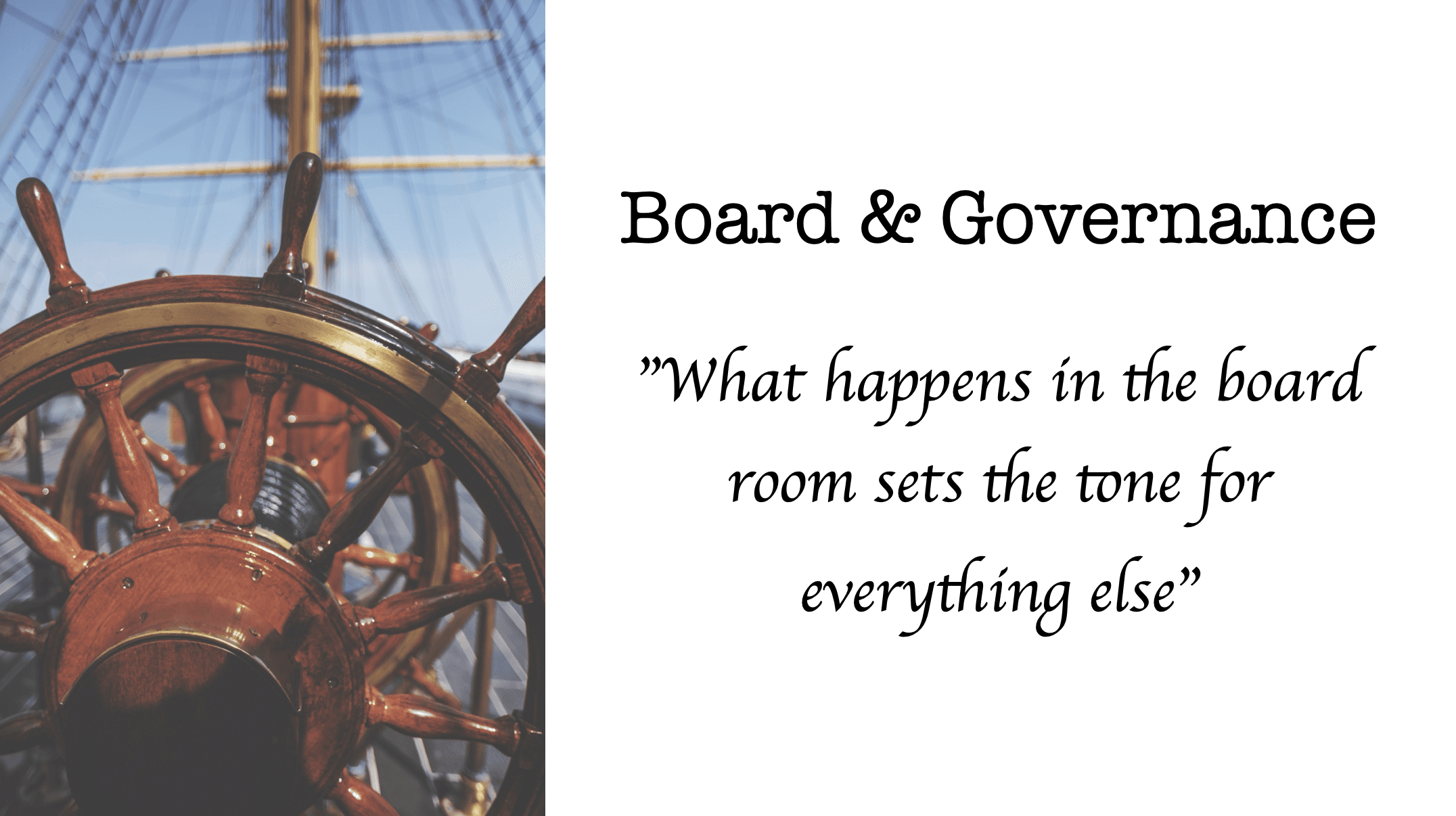
Board & Governance - Guardians of Purpose and Responsibility

People & Values - The Inner Life of an Organization
Strategy Needs More Than Smartness

The Mission & Vision Dimension of the GreenGardens® Model
Restoring Dignity to Organizational Life
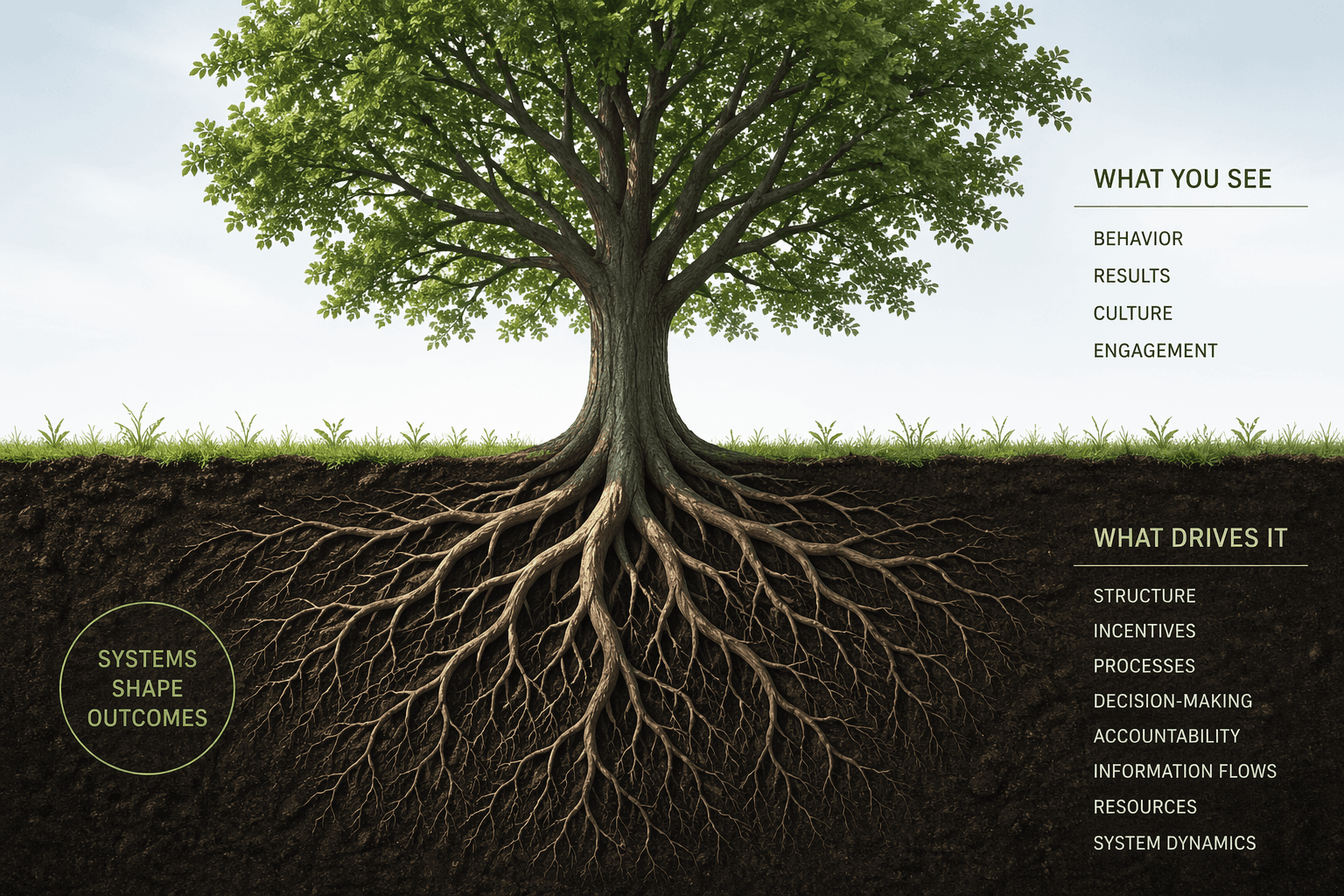
Why Organizational Problems Are Usually Systemic - And Why Most Measurement Tools Miss the Point
