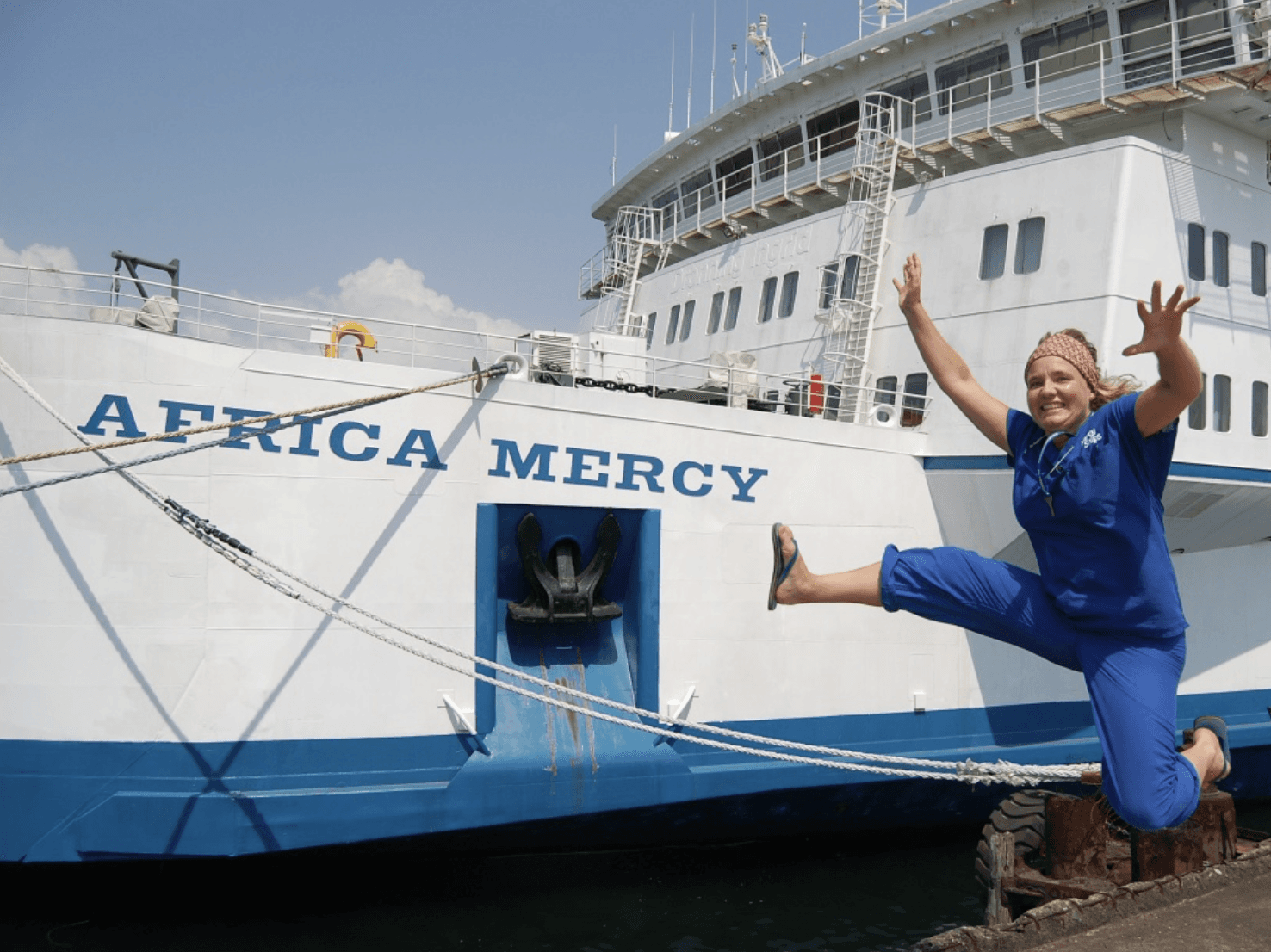
What does it take to lead 70 nurses from 40 nations?
The Quest for the Healthy Organization® has this time brought me to Anneli Persson!
Anneli is an operating room nurse and team leader for ophthalmic surgery with Mercy Ships, an international charity operating hospital ships that provide free medical care in low- and middle-income countries, primarily in Africa. She first came onboard in 2008 - and is now heading out on her 29th mission!
During a field service period onboard, around 60–70 nurses may pass through her operating room, many of them completely new to the specialty. The team often represents 30–40 different nationalities. In that environment, the work must function - every day, for every patient.
So what does it actually take to lead in such a context?
When I ask Anneli, the answer comes quickly. For her, leadership is not about positions, titles, or hierarchy. It is about people.
“Leadership is about bearing good fruit, about helping others grow.”
This perspective shapes her entire approach to leadership. In an operating room where people from all over the world meet - and where new teams are formed almost every week - development cannot wait. It has to happen immediately.
Many of the nurses joining the team have never worked with ophthalmic surgery before. They face a new specialty, new colleagues, and a new culture - while the work must function from day one.
A core principle in Anneli’s leadership is therefore that people should not only be given tasks, but responsibility. She explains that a leader does not need to hold all the knowledge, but rather understand where the knowledge exists.
“As a leader, I don’t need to have all the knowledge. Everyone in the team has knowledge, my role is to know where to find it.”
This shifts the perspective on leadership. Instead of concentrating responsibility with the leader, a team is created where competence is distributed and each person contributes with their strengths.
Anneli also makes a point of identifying someone in the team who can act as a kind of deputy leader, someone who can step in if she is not there. In this way, more leaders are continuously developed.
In an environment where many are new, psychological safety becomes essential. That is why Anneli works extensively with structure. Before each workday, she plans how the team will operate in the operating room and how roles will be assigned. A schedule is posted in the operating room the day before so that everyone can clearly see it.
She often pairs a more experienced nurse with someone newer to the field, creating a natural form of mentorship within the daily work.
The results can be striking. A nurse who feels uncertain on the first day may, just a few days later, be helping someone else.
To describe how learning happens, Anneli refers to the principle:
“See one, do one, teach one.”
First, you observe. Then, you do it yourself. And finally, you teach someone else.
When knowledge spreads in this way, the entire team grows. Anneli believes this is a principle many organizations could apply more consciously. Mentorship does not always have to be tied to seniority. Sometimes younger colleagues can be excellent mentors, especially when it comes to structuring and explaining knowledge.
Another important part of her leadership takes place at the end of the workday. The team often gathers for a few minutes of simple reflection. The same questions are asked every day:
What did we do well today?
What could we have done better?
How will we improve tomorrow?
These are not long meetings or complex processes. But those few minutes create continuous learning within the team. Small improvements every day make a big difference over time.
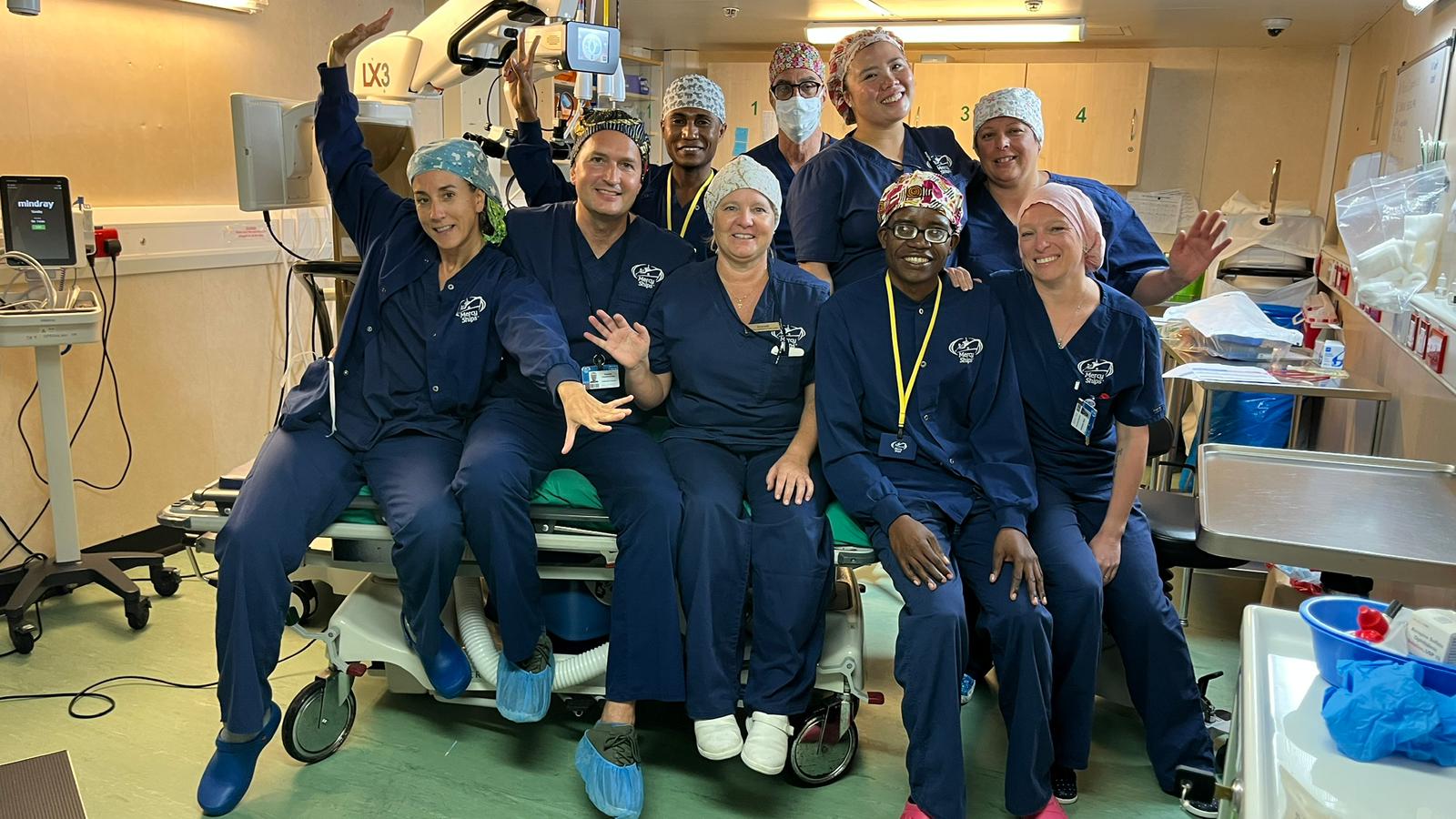
Leading in an environment with up to forty nationalities also means navigating different cultures and ways of working. Some prefer clear instructions, others work more intuitively. Some are highly structured, others more spontaneous.
For the leader, this means understanding these differences - and creating a shared direction.
Despite these differences, there is often something that unites people working with Mercy Ships: the desire to make a difference for patients who would otherwise not have access to surgical care. That shared purpose creates strong cohesion, even in teams that change rapidly.
When I ask Anneli what truly lies at the core of good leadership, she returns to the same idea as at the beginning of our conversation:
Helping others grow.
In an environment where people come and go, where teams are constantly changing, and where the work can quite literally change lives, it becomes clear that leadership is not about being at the center. It is about creating the conditions for others to succeed.
If you want to follow Anneli’s journey, you can read her blog: https://mercyshipsanneli.org/. She will also be releasing a book soon.
🔑 Anneli’s “Big Five” for Leadership
See the individual: Identify people’s strengths and help them grow
Give responsibility, not just tasks: Let team members own their areas and contribute their knowledge
Develop new leaders: Intentionally build a deputy leader who can step in when needed
Listen and show respect: Create dialogue, not just direction
Create safety through structure: Be clear about frameworks and pair experienced and less experienced team members

The Economy of Trust

When the Company Is No Longer at the Center

Impact & Value Creation - When Value Actually Becomes Value

Operation & Finance - Stewardship in Practice
Board & Governance - Guardians of Purpose and Responsibility

People & Values - The Inner Life of an Organization
Strategy Needs More Than Smartness

The Mission & Vision Dimension of the GreenGardens® Model

Restoring Dignity to Organizational Life
Why Organizational Problems Are Usually Systemic - And Why Most Measurement Tools Miss the Point
