People & Values - The Inner Life of an Organization
In the GreenGardens® Model, People & Values are described as follows:
"People & Values reflect a deep respect for human worth and responsibility. They shape the spirit of the organization: how people feel, treat one another, how trust is built, and how decisions are made. Shared values form the moral compass of the organization and cultivate commitment, care and integrity."
Of the model’s eight dimensions, this is perhaps the one most people intuitively recognize as important, yet at the same time one of the most difficult to build. Most leaders would agree that culture matters. Few would argue that trust, integrity, or respect are unimportant. Yet time and again we see organizations in which these very qualities gradually erode, despite well-developed strategies, clear structures, and carefully designed processes. Perhaps this is because we sometimes underestimate the importance of an organization’s inner life.
There is an old proverb that I often return to:
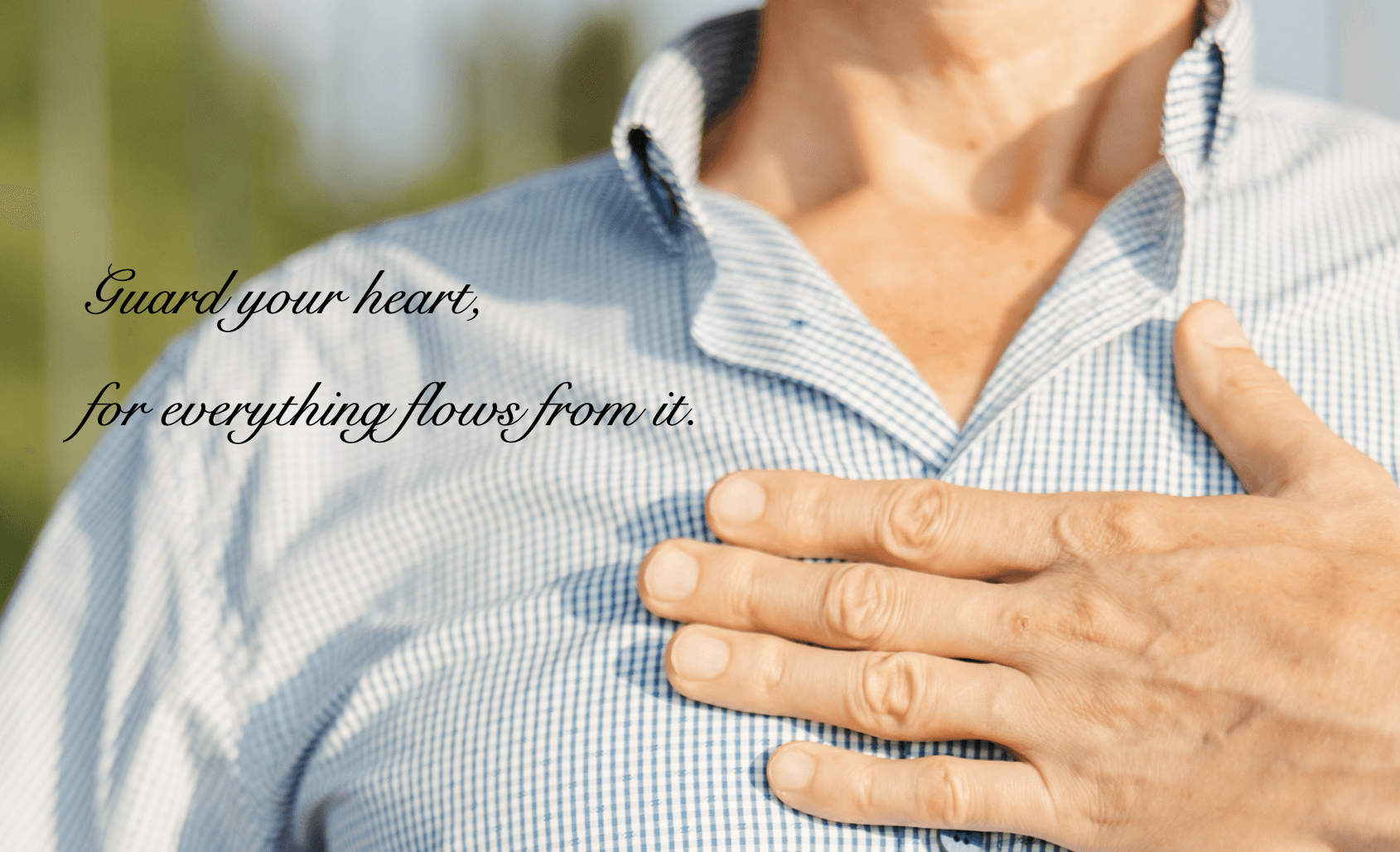
"Above all else, guard your heart, for everything you do flows from it."
These words are addressed to the individual. Yet I believe they also contain an organizational truth.
Every organization has a center from which its life flows. It is there that the values shaping how people treat one another, handle conflicts, make decisions, and define success are formed. It is there that stories are retold, behaviors are encouraged, and actions are quietly tolerated. It is there that the spirit of the organization takes shape.
This is why Bolman and Deal, in their influential work Reframing Organizations, identify the symbolic perspective as one of the four central lenses through which organizational life can be understood. This perspective highlights the fact that organizations are not merely systems of tasks, processes, and roles. They are also cultures: communities held together by shared values, stories, and beliefs about why the organization exists. What leaders do symbolically, what is celebrated, what is quietly tolerated, and which stories are told again and again - all of these shape the organization’s inner life far more than most formal frameworks acknowledge.
If Bolman and Deal are right, then an organization’s future is not determined solely by the quality of its strategy or structure. It is also determined by the quality of its inner life.
We are shaped through relationships. We learn language through relationships. We develop trust because someone first places trust in us. We grow into responsibility because someone entrusts us with responsibility. None of us is formed in a vacuum.
When people feel seen, respected, and included in something meaningful, something happens to their level of engagement. They begin to invest more of themselves in the whole. They contribute not only their competence but also their judgment, creativity, and willingness to take responsibility. Community becomes not an obstacle to individual development, but a prerequisite for it.
This raises an important question: What is it that makes such a community possible?
During my studies in Integral Economics at the University of Fribourg, I encountered several perspectives on the relationship between economics, society, and human flourishing. In one of the lectures, Dr. Walter Dürr argued that modern societies often overestimate the importance of markets and efficiency while underestimating the importance of community. Human beings naturally need to produce, perform, and create value. Organizations need results. But people need something more. We need relationships, belonging, meaning, and care. Communities are not built merely through shared goals or effective exchanges. They are built through a willingness to invest in one another.
What impressed me most, however, was not his analysis of community but his reflections on love. Love is a word rarely heard in leadership teams, strategic plans, or organizational analyses. We readily speak of engagement, collaboration, trust, and culture, but less often of the force that frequently lies behind them. If love is understood as a genuine commitment to seeking the good of another person, it ceases to be a sentimental addition to organizational life. It becomes one of the forces that makes genuine community possible.
Through his work in leadership and community development, Andréas Andersson has developed the AGIR model. What particularly captured my attention is the model’s fundamental assumption that sustainable change occurs from the inside out. Respect, which many organizations seek to create through rules, processes, and behavioral codes, is not described as the starting point but rather as the result of something deeper. The model describes a movement from love to grace, from grace to integrity, and from integrity to respect.
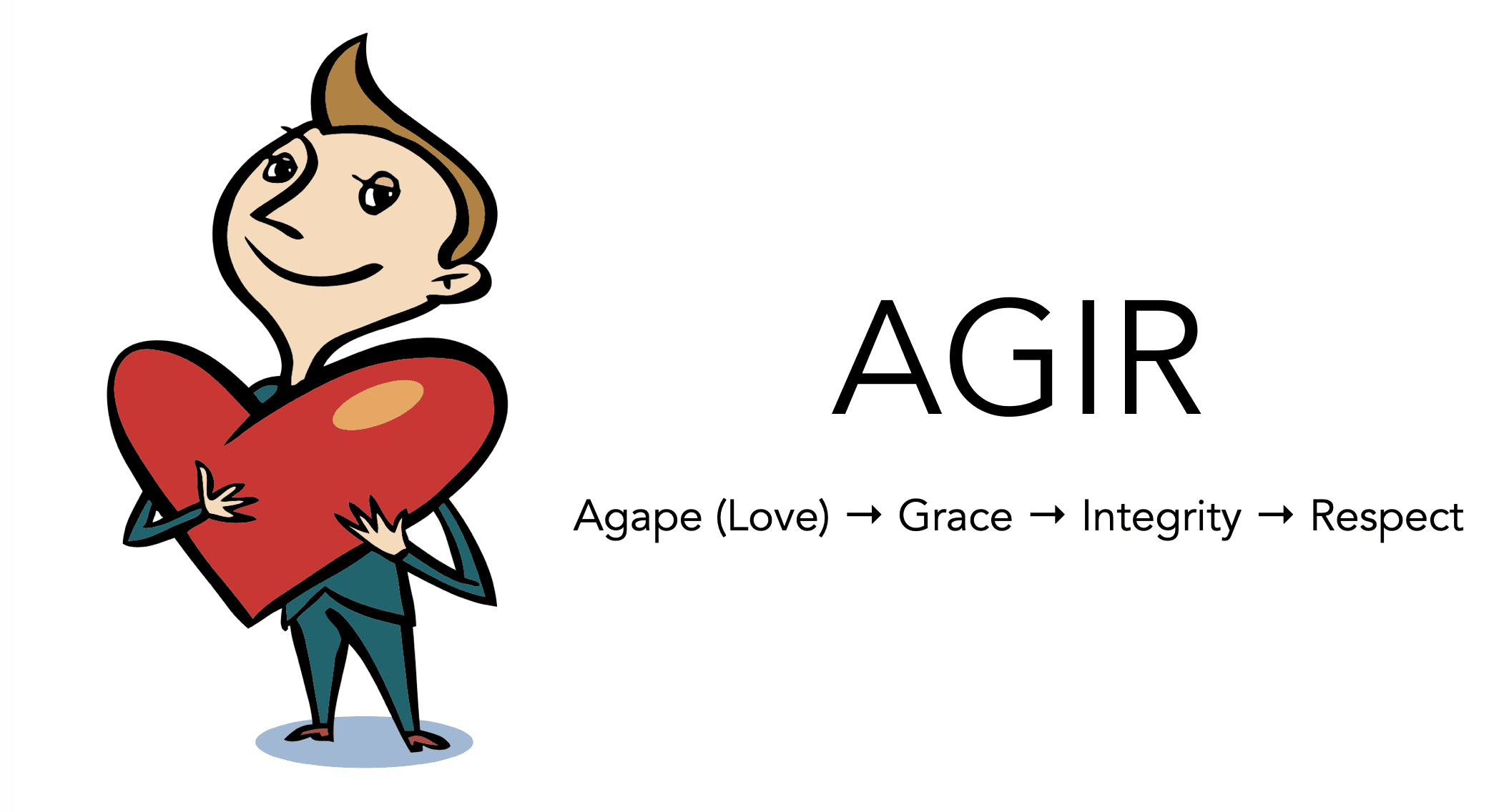
The order is what makes the model so interesting.
Many organizations attempt to establish respect through policies, values statements, and expectations. Yet AGIR suggests that respect is actually the fruit of a deeper process. People rarely sustain respect for leaders solely because of their position. Respect grows when there is a clear alignment between what a leader says and how that leader actually lives and acts. And it becomes significantly easier to face the truth where grace is present - where mistakes do not automatically lead to condemnation but can become part of the learning process.
The idea that love forms the starting point of the model is perhaps its most challenging insight. Not love in a romantic or sentimental sense, but love understood as a genuine desire to seek the good of another. According to AGIR, it is from this posture that grace, integrity, and ultimately respect can emerge.
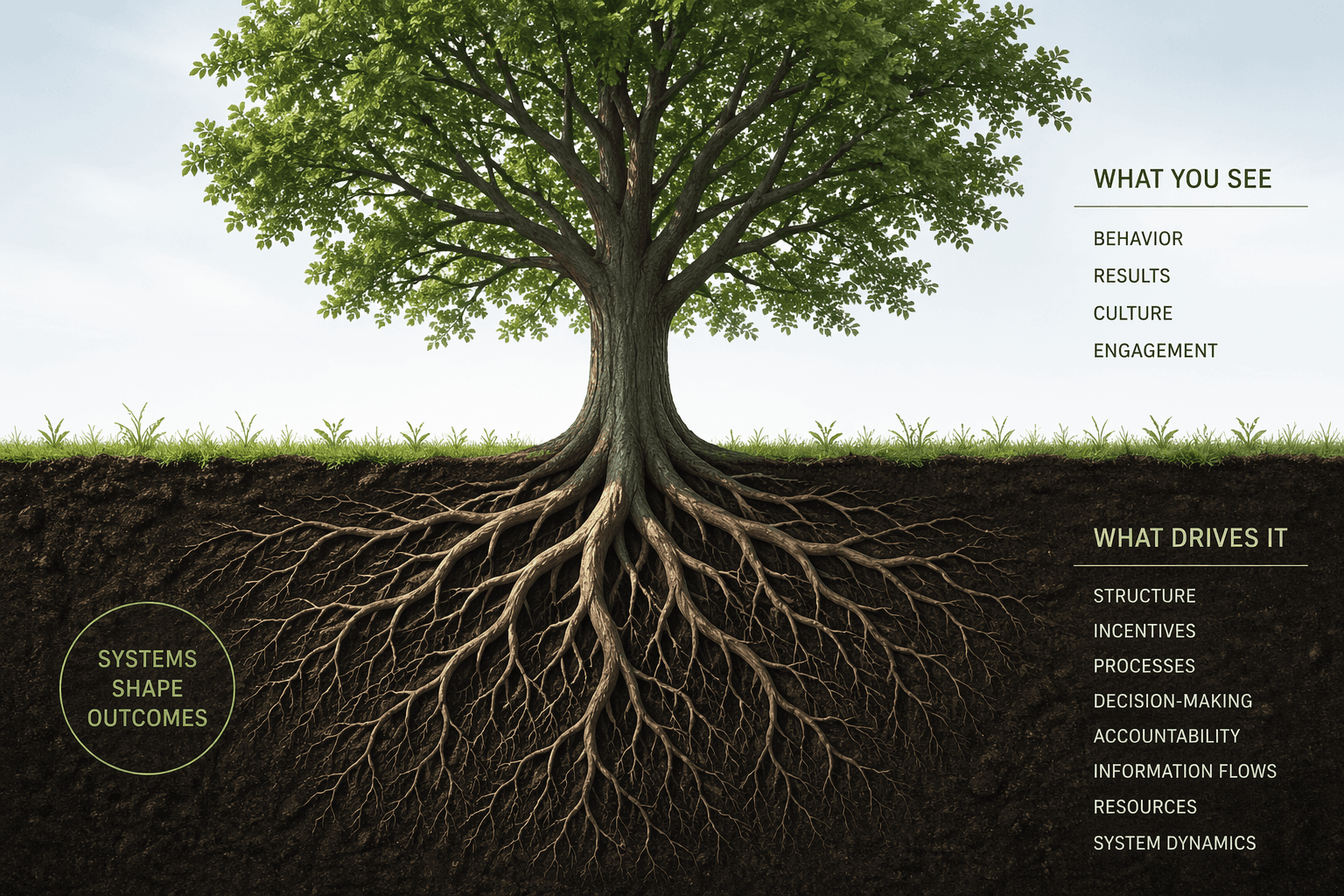
Perhaps this is also where many culture initiatives go wrong. We try to change behaviors without addressing the values that shape those behaviors. We focus on the outside when the challenge actually lies within. We work on symptoms when we should be working on roots.
People & Values is therefore about far more than employee satisfaction or engagement. It concerns the moral compass of the organization. It concerns the values that guide decisions when no policy provides an obvious answer. It concerns the quality of relationships that determines whether people feel safe enough to contribute their best. It concerns the culture that either strengthens or weakens the organization’s ability to fulfill its purpose.
Within the GreenGardens® Model, key focus areas within People & Values include existential health, high-performing teams, coherence, as well as righteousness, peace, and joy. What these areas share is that they all ultimately concern the quality of life together.
This does not make the dimension soft. It makes it foundational.
Without trust, collaboration does not work. Without integrity, leadership does not work. Without shared values, strategy loses its power. And without care for the organization’s inner life, even the most sophisticated structures risk becoming empty shells.
Perhaps that is why the proverb still feels so relevant today.
Guard your heart. For everything flows from it.

The Economy of Trust

When the Company Is No Longer at the Center

Impact & Value Creation - When Value Actually Becomes Value

Operation & Finance - Stewardship in Practice
Board & Governance - Guardians of Purpose and Responsibility
People & Values - The Inner Life of an Organization
Strategy Needs More Than Smartness
The Mission & Vision Dimension of the GreenGardens® Model
Restoring Dignity to Organizational Life
Why Organizational Problems Are Usually Systemic - And Why Most Measurement Tools Miss the Point
